The restaurant kitchen equipment list India restaurant owners actually need looks very different from what most generic guides suggest. India’s food service market is valued at USD 56.24 billion in 2026 and growing at nearly 10% CAGR, which means new restaurants are opening across every city and town at a pace the country has never seen before. Full-service restaurants alone account for 58.78% of India’s foodservice market in 2026, and independent restaurants represent 71.46% of the total market.
Behind every one of those restaurants is a commercial kitchen. And behind every well-run commercial kitchen is the right equipment, chosen for the right cuisine, at the right capacity.
This guide gives you a complete, India-specific restaurant kitchen equipment list, organized by category, with guidance on what is mandatory from day one, what can be added later, and what depends entirely on your menu type.
1. Why Getting Your Equipment List Right Matters
Most first-time restaurant owners in India spend the majority of their planning budget on interiors, furniture, and branding. The kitchen, which is the actual engine of the business, often gets planned last and budgeted least.
This is the single most common reason new restaurants struggle in their first year. The wrong equipment creates slow prep times, inconsistent food quality, high breakdown costs, and FSSAI compliance problems that can shut your kitchen down before you build a customer base.
Getting your restaurant kitchen equipment list right from the start delivers four specific benefits:
Consistent food quality: Equipment matched to your menu and volume produces the same result every time. An underpowered cooking range or inadequate refrigeration creates variability that shows up as inconsistent reviews.
Faster service: A kitchen where every piece of equipment is in the right place and rated for the right volume gets food out faster. In a dine-in restaurant, table turn time is directly linked to kitchen speed.
FSSAI compliance from day one: The right equipment means you pass your FSSAI inspection on the first visit rather than spending weeks fixing non-compliant setups before you can open.
Lower long-term costs: Quality commercial equipment lasts 10 to 15 years with proper maintenance. Underinvesting at setup leads to frequent breakdowns and replacement costs that far exceed the original savings.
2. Complete Restaurant Kitchen Equipment List India: Category by Category
India’s restaurant market covers an enormous range of cuisine types, service formats, and kitchen sizes. Rather than a one-size-fits-all list, this guide is organised by equipment category with notes on what is universal and what is cuisine-specific.
The six core categories every restaurant kitchen in India needs regardless of cuisine or format:
- Cooking equipment
- Food preparation equipment
- Refrigeration and cold storage
- Dishwashing and sanitation
- Ventilation and safety
- Storage equipment
Two additional categories that depend on your service format:
- Service and holding equipment
- Menu-specific cooking equipment
3. Cooking Equipment
Cooking equipment is the heart of your restaurant kitchen. It determines what you can cook, how fast you can cook it, and how consistently you can produce the same dish across every service.
Commercial Gas Cooking Range
The foundation of virtually every Indian restaurant kitchen. Used for gravies, curries, dal, rice, fried items, and most hot food preparation. Available in 2-burner, 4-burner, and 6-burner configurations.
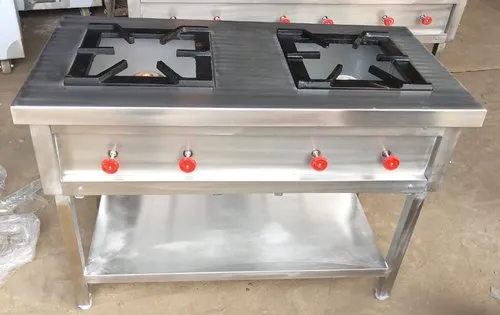
Choosing the right burner count:
- 2-burner range: Suitable for very small restaurants, tiffin services, or supplementary cooking stations
- 4-burner range: Ideal for small to mid-size restaurants with focused menus (30 to 80 covers)
- 6-burner range: Required for larger restaurants or those running complex, multi-dish menus simultaneously
Key features to look for: cast iron burners for durability, full SS body for FSSAI compliance, heavy-duty SS grates, and adjustable legs.
Tandoor Oven
Mandatory for any restaurant serving North Indian cuisine. Naan, tandoori roti, tandoori chicken, seekh kebab, and paneer tikka all require a commercial tandoor. Available in gas-fired and charcoal versions.
Gas-fired tandoors are the standard for commercial kitchens as they reach temperature faster, are easier to regulate, and are safer to operate in an enclosed space than charcoal tandoors. Position directly under the main exhaust hood.
Dosa Tawa
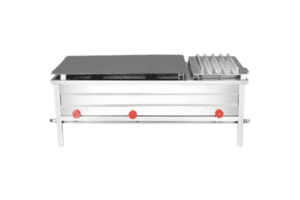
Essential for South Indian restaurants, tiffin centres, and multi-cuisine restaurants with a South Indian section. A commercial dosa tawa is a large, flat circular griddle that operates on a dedicated burner. Standard commercial sizes range from 36 to 48 inches. Not interchangeable with a standard range burner setup.
Commercial Deep Fryer
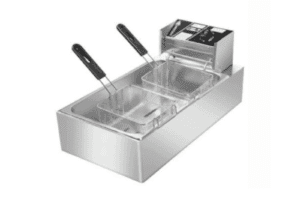
Required for restaurants serving fried items: starters, snacks, Chinese food, fast food, and South Indian items like vadas and bhajias. Available in single-tank and double-tank configurations. Choose based on how central fried food is to your menu.
Commercial Wok Burner
For restaurants with Chinese, Indo-Chinese, or Thai menu items. Standard commercial range burners often do not produce sufficient BTU output for proper wok cooking. A dedicated high-BTU wok burner is a separate requirement for Chinese-focused kitchens.
Convection Oven or Deck Oven
For restaurants with baking requirements. A counter-top convection oven handles most reheating, grilling, and light baking needs. A deck oven is required for high-volume bread, pizza, or bakery production. Not required in pure Indian cuisine restaurants without a baking component.
Commercial Idli Steamer
Required for South Indian restaurants serving idli. Multi-tier commercial idli steamers produce large batches simultaneously and are built for continuous use during breakfast and brunch service.
4. Food Preparation Equipment
Stainless Steel Work Tables
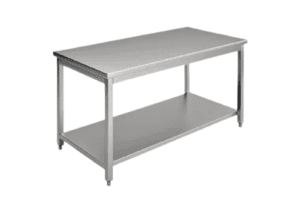
The primary food prep surface in any commercial kitchen. All food-contact surfaces must be SS as per FSSAI requirements. No wood, no tile, no painted surfaces in food prep areas.
Most restaurants need a minimum of two SS work tables: one for raw ingredient preparation and one for cooked food plating and assembly. Larger kitchens benefit from dedicated tables for each station.
Features to look for: heavy-gauge SS top (minimum 14 gauge), under-shelf for storage, adjustable feet for levelling on uneven floors.
Commercial Mixer Grinder
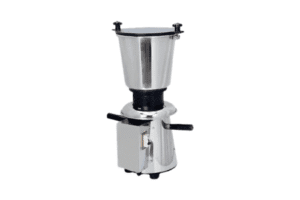
For grinding masalas, batters, chutneys, and pastes. A commercial table-top mixer grinder handles the volume requirements of most small to mid-size restaurants. Heavy-duty floor-standing commercial mixers are required for larger operations or bakery-focused menus.
Wet Grinder
Specifically required for South Indian restaurants preparing fresh dosa and idli batter. A commercial wet grinder produces smoother, better-fermented batter than a mixer grinder. Available in table-top and floor-standing models depending on your batch volume.
Vegetable Cutting Machine
For restaurants processing large quantities of vegetables daily. Saves significant prep time in high-volume kitchens. Not essential for small restaurants where manual cutting is manageable, but increasingly standard in larger operations.
Food Processor
For blending soups, sauces, and purees. Supplements the mixer grinder for specific processing tasks. Useful in multi-cuisine restaurants with varied cooking requirements.
Colour-Coded Chopping Boards
Mandatory under FSSAI food safety guidelines. A minimum of four colours must be used:
- Red: raw meat and poultry
- Green: vegetables and fruits
- Yellow: cooked food
- White: dairy and bakery
Each colour must be used exclusively for its designated food type. FSSAI inspectors check for this. Sharing boards between food types is a direct food safety violation.
Commercial Weighing Scale
For portion control, recipe consistency, and food cost management. Every commercial kitchen needs at least one accurate weighing scale. Larger kitchens with multiple prep stations benefit from one per station.
Knife Set and Sharpener
A professional knife set appropriate to your cuisine type. A steel sharpener or whetstone must be available for maintaining knife edges. Dull knives are a food safety hazard in addition to being inefficient.
5. Refrigeration and Cold Storage
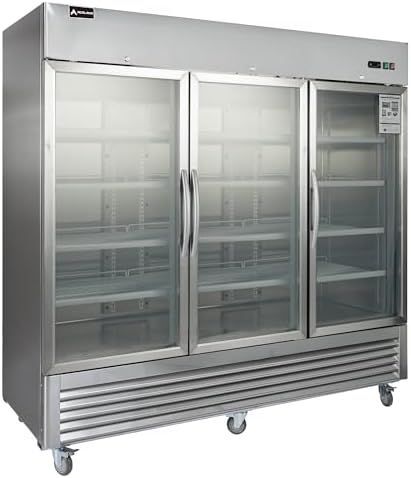
Proper refrigeration is one of the most critical FSSAI requirements and one of the biggest food safety fundamentals. Inadequate refrigeration leads to ingredient spoilage, food safety violations, and FSSAI inspection failures.
Commercial Single-Door Upright Refrigerator
For storing prepped ingredients, marinades, sauces, and cooked food components at 1 to 4 degrees Celsius. Every restaurant needs at least one. Larger restaurants with multiple sections or high ingredient volumes need multiple units.
Look for units with a working temperature display visible from outside, adjustable shelving, and a commercial-grade compressor rated for continuous operation.
Commercial Double-Door Refrigerator
For mid-size to large restaurants requiring greater cold storage capacity. Allows separate storage zones within one unit and reduces the number of separate refrigerators needed.
Chest Freezer
For storing frozen proteins, ice cream, frozen ingredients, and bulk frozen items. Essential for any restaurant using frozen ingredients. Size the capacity to your weekly purchase volume.
Under-Counter Refrigerator
Positioned beneath the SS work table at the cooking station for quick access to frequently used prepped ingredients. Reduces unnecessary movement during service and significantly speeds up plating and cooking.
Refrigerated Display Counter (for relevant formats)
Required for bakeries, dessert counters, and restaurants with displayed cold food. Not required in pure dine-in restaurant kitchens without a display food component.
Important refrigeration rules under FSSAI:
- Raw meat must always be stored below cooked food, never above
- Refrigerators must maintain documented temperatures
- All stored food must be covered and labelled with preparation date
- Refrigerator temperature must be verified and recorded daily
6. Dishwashing and Sanitation Equipment
Three-Compartment Sink
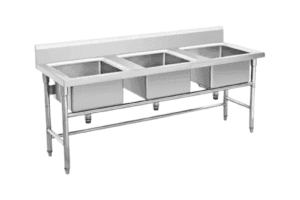
Mandatory under FSSAI regulations for all commercial kitchens. One compartment for washing, one for rinsing, one for sanitising. A single-bowl or double-bowl sink is not a compliant substitute. This is the most commonly failed item in FSSAI restaurant inspections across India.
Specifications: heavy-gauge SS construction, drain board on at least one side, standard plumbing connections.
Separate Handwashing Sink
FSSAI requires a dedicated handwashing sink at the kitchen entry, separate from the utensil washing area. Soap dispenser and disposable paper towels must be mounted directly alongside it. This sink must not be used for any other purpose.
Commercial Dishwasher
For restaurants above 50 to 80 covers, a commercial dishwasher is a significant efficiency investment. Available in three main types:
- Under-counter dishwasher: For smaller operations. Fits beneath the counter and handles lower volumes.
- Hood-type dishwasher: For mid-size to large restaurants. Rack-based system with significantly higher throughput than under-counter units.
- Conveyor dishwasher: For high-volume restaurants and hotels. Continuous wash cycle for maximum throughput.
For small to mid-size restaurants, a three-compartment sink handles dishwashing requirements adequately. A commercial dishwasher becomes essential as cover count and utensil volume increase.
Sanitiser Dispensers
Food-safe sanitiser dispensers must be present at every prep station. Wall-mounted dispensers keep sanitiser accessible without taking up workspace.
Waste Bins with Lids
Required at every prep and cooking station under FSSAI. Bins must be lidded, lined, and emptied regularly during service. Open waste bins are a common inspection failure point.
7. Ventilation and Safety Equipment
Commercial Exhaust Hood
Mandatory above every open-flame cooking station. Removes smoke, grease particles, heat, and cooking odours from the kitchen. The hood must extend at least the full width of the cooking equipment beneath it and ideally slightly wider on each side.
Size the exhaust hood correctly for your cooking equipment. An undersized hood does not clear the kitchen effectively and creates a grease buildup hazard on surfaces and ductwork.
Exhaust Fan and Ducting
Works alongside the exhaust hood to expel air outside the building. Ducting must run directly to an exterior wall or roof, not into a false ceiling cavity. The exhaust fan must be rated for the volume of air your hood collects.
Makeup Air System (for larger kitchens)
Large commercial exhaust hoods extract significant air volume. Without a makeup air supply, the kitchen develops negative pressure that makes exhaust hoods less effective. Required in larger restaurant kitchens with high-capacity exhaust systems.
Fire Extinguisher
Required by both FSSAI and local fire department NOC. Minimum one ABC-type dry powder fire extinguisher (2 kg minimum) mounted near the cooking station. Kitchens with deep fryers additionally need a Class K wet chemical extinguisher rated for cooking oil fires.
Extinguishers must be serviced annually and inspection tags kept current. Expired extinguishers will fail both FSSAI and fire department inspections.
Fire Suppression System (for larger operations)
Commercial kitchens with large exhaust hoods and multiple cooking stations increasingly install automatic fire suppression systems within the exhaust hood ductwork. Not mandatory for all kitchens but increasingly standard in newer restaurant setups.
First Aid Kit
Must be accessible to all kitchen staff at all times. A basic requirement that is frequently missed during initial setup.
8. Storage Equipment
Stainless Steel Shelving Racks
Heavy-duty SS shelving for storing dry goods, packaging materials, utensils, and equipment. FSSAI requires all goods to be stored at least 15 cm off the floor. Floor-level storage is a pest control risk and a direct inspection failure.
Most restaurant kitchens need a minimum of two to three shelving units. Larger kitchens with dry storage rooms need more.
Wall-Mounted Pot Rack
For hanging large pots, pans, and ladles above the cooking station. Keeps the most frequently used cookware accessible without using counter space. Standard in Indian restaurant kitchens where a large variety of pots and pans are in active use simultaneously.
Ingredient Containers with Lids
All ingredients in active use must be stored in covered containers clearly labelled with the ingredient name and date. FSSAI requirement. Standard hotel pans, lexan containers, or SS containers with lids meet this requirement.
Spice Rack at the Cooking Station
For spices in active use during service. A wall-mounted or counter-top spice rack at each cooking station reduces movement and speeds up cooking during peak hours.
9. Service and Holding Equipment
Bain Marie (Hot Holding Unit)
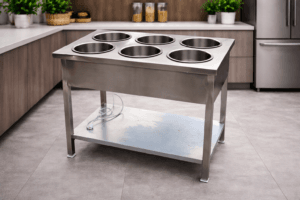
For restaurants serving buffets or maintaining hot food at service temperature. Keeps cooked food at a safe holding temperature (above 63 degrees Celsius as per food safety guidelines) without continuing to cook it. Essential for buffet operations, canteens, and high-volume dine-in restaurants.
Pass-Through Window or Counter
The interface between the kitchen and the front of house. A well-designed pass with a heat lamp keeps plated food at the right temperature while waiting to be collected by service staff.
Heat Lamp
Keeps plated dishes warm at the pass without overcooking. Standard in mid-size to large dine-in restaurants with any distance between the cooking station and the dining area.
POS Terminal in the Kitchen
A kitchen display screen or printed ticket system that communicates orders from the front of house to the kitchen. In a small restaurant, verbal communication or handwritten tickets work. In any restaurant above 30 to 40 covers, a KDS or ticket printer is a meaningful efficiency investment.
10. Equipment List by Restaurant Type
Small Restaurant (under 30 covers)
Core must-haves:
- 4-burner commercial gas range
- One SS work table (minimum)
- Single-door commercial refrigerator
- Chest freezer
- Three-compartment sink
- Separate handwashing sink
- Exhaust hood and fan
- Commercial mixer grinder
- Colour-coded chopping board set
- Weighing scale
- SS storage shelving (two units)
- Fire extinguisher
Add based on cuisine:
- Tandoor (North Indian)
- Dosa tawa (South Indian)
- Deep fryer (fried items)
Mid-Size Restaurant (30 to 80 covers)
Everything above, plus:
- Second SS work table
- 6-burner range or two 4-burner ranges
- Double-door commercial refrigerator
- Under-counter refrigerator at cooking station
- Commercial dishwasher (under-counter type)
- Bain marie if serving buffet
- Vegetable cutting machine
- Heat lamp at pass
- KDS or ticket printer
Large Restaurant (above 80 covers)
Everything above, plus:
- Multiple cooking stations with dedicated ranges
- Full-capacity hood-type or conveyor dishwasher
- Multiple refrigeration units
- Dedicated dry storage room with full shelving
- Automatic fire suppression in exhaust hood
- Makeup air system
- Full POS and KDS integration
11. What to Buy First vs What to Add Later
Day 1 Essentials (Before FSSAI Inspection)
| Equipment | Why It Cannot Wait |
| Commercial gas range | Primary cooking equipment |
| SS work table (minimum one) | FSSAI requires SS food-contact surfaces |
| Single-door refrigerator | FSSAI requires adequate cold storage |
| Three-compartment sink | Mandatory FSSAI requirement |
| Handwashing sink | Mandatory FSSAI requirement |
| Exhaust hood and fan | FSSAI and fire safety requirement |
| Colour-coded chopping boards | FSSAI food safety requirement |
| Fire extinguisher | FSSAI and fire NOC requirement |
| Lidded waste bins | FSSAI requirement at every station |
| SS shelving (off-floor storage) | FSSAI pest control requirement |
Add in First 3 to 6 Months
| Equipment | When to Add |
| Second SS work table | When prep volume creates a bottleneck |
| Under-counter refrigerator | When cooking station efficiency matters |
| Commercial dishwasher | When cover count crosses 40 to 50 |
| Vegetable cutting machine | When daily vegetable prep exceeds 2 hours |
| Bain marie | When adding buffet or high-volume service |
| Heat lamp at pass | When food arrives cold to the table |
12. FSSAI Equipment Requirements Every Restaurant Must Meet
Before your restaurant takes its first order, your kitchen will be inspected under FSSAI licensing requirements. Here is exactly what inspectors look for on the equipment and infrastructure side:
- All food-contact surfaces must be stainless steel, no wood or painted surfaces
- Three-compartment sink present and functional
- Separate handwashing sink at kitchen entry with soap and disposable towels
- Colour-coded chopping boards in use, one set per food type
- Adequate working refrigeration with visible temperature controls
- All dry goods stored minimum 15 cm off the floor
- Lidded waste bins at every prep and cooking station
- Exhaust hood above all open-flame cooking equipment
- ABC-type fire extinguisher present and in-date
- No signs of pest activity in storage or prep areas
- Potable water supply confirmed and drainage functional
Meeting all of the above on your first inspection means you open on time. Missing items means re-inspection, which adds weeks to your launch timeline.
13. FAQs
Q: What is the most important equipment in a restaurant kitchen in India?
The commercial gas cooking range is the single most important piece of equipment in any Indian restaurant kitchen. It handles the primary cooking load for virtually every dish on an Indian restaurant menu. Getting the right burner count and BTU output for your cuisine and cover count is the foundation of a functional commercial kitchen.
Q: How many SS work tables does a restaurant kitchen need?
A minimum of two SS work tables for any restaurant: one dedicated to raw ingredient preparation and one for cooked food assembly and plating. Larger restaurants with multiple kitchen sections need additional tables per station. All must be stainless steel as per FSSAI requirements.
Q: Can I use domestic kitchen equipment in a restaurant in India?
No. Domestic equipment is not FSSAI compliant for commercial use, not rated for the volume and continuous operation of a restaurant kitchen, and will fail your licensing inspection. All equipment in a commercial kitchen that contacts food must meet commercial grade and material standards.
Q: What equipment does FSSAI specifically check during a restaurant inspection?
FSSAI inspectors specifically check for SS food-contact surfaces, a three-compartment sink, a separate handwashing sink with soap and towels, colour-coded chopping boards, working refrigeration, off-floor dry storage, lidded waste bins at every station, an exhaust hood above cooking equipment, and a fire extinguisher. These are the non-negotiable items that must be in place before your first inspection.
Q: Where can I buy restaurant kitchen equipment in Ahmedabad?
Nilkanth Equipments, based in Ahmedabad, supplies a complete range of commercial restaurant kitchen equipment across Gujarat and India. We carry cooking ranges, refrigeration, SS fabrication, sinks, shelving, crockery, utensils, and complete kitchen setups, both new and quality pre-owned.
Building Your Restaurant Kitchen? Start with the Right Equipment.
A well-planned restaurant kitchen equipment list saves you time, money, and the headache of last-minute changes before your FSSAI inspection. At Nilkanth Equipments, we help restaurant owners across Ahmedabad and Gujarat build kitchens that are compliant, efficient, and built for real service volumes.
📞 Call us for a free equipment consultation and quotation. 🌐 www.nilkanthequipments.in
Visit our showroom in Ahmedabad to see the equipment before you buy.