Our blog

How to Choose the Right Cooking Range for Cloud Kitchen in India

Ut elit tellus, luctus nec ullamcorper mattis, pulvinar dapibus leo.

Choosing the right cooking range for cloud kitchen operations is one of the most important equipment decisions you will make. Every single order that leaves your cloud kitchen passes through your cooking range. If it is underpowered, your prep times slow down. If it is oversized, you are wasting space and fuel. If it is the wrong type for your menu, your food quality suffers regardless of how good your recipes are.

This guide walks you through everything you need to know before buying a cooking range for your cloud kitchen in India, including burner count, BTU output, fuel type, material quality, and menu-specific recommendations.


1. Why the Cooking Range Is the Most Critical Equipment in a Cloud Kitchen
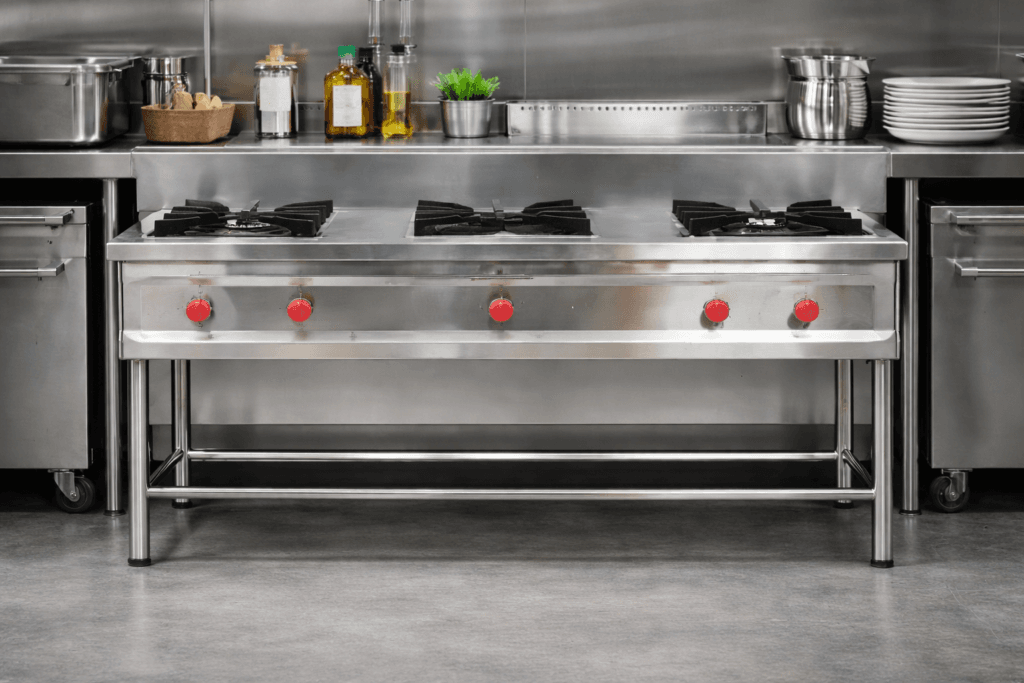
In a traditional restaurant, a dish can be partly saved by presentation, ambience, or service. In a cloud kitchen, the food alone carries the entire customer experience. By the time the order reaches the customer, the cooking range is the single piece of equipment that determined whether the food was cooked right.

Beyond food quality, your cooking range directly affects:

Order speed: A range with insufficient BTU output cannot bring water to boil, heat oil, or cook gravies as fast as a properly rated commercial range. Every extra minute at the cooking station adds up across 40 or 50 orders a day.

Delivery ratings: Zomato and Swiggy both track preparation time as a key performance metric. Consistently slow prep times push your listing down in search results. A correctly matched cooking range keeps your prep times within the platform’s target window.

Staff efficiency: A range that is the right size for your kitchen and your menu allows your team to develop a consistent cooking rhythm. A poorly chosen range forces constant workarounds that slow everyone down.

FSSAI compliance: Commercial cooking ranges are built with stainless steel bodies and food-grade materials. Domestic stoves are not compliant for use in an FSSAI-licenced cloud kitchen.


2. How to Choose the Right Cooking Range for Cloud Kitchen Operations

The right cooking range for cloud kitchen use is determined by four factors working together: the number of burners, the BTU output per burner, the fuel type, and the build quality. Choosing based on only one of these factors is where most first-time cloud kitchen operators go wrong.

Here is the decision framework:

Step 1: Determine your daily order target Your order volume determines how much simultaneous cooking capacity you need, which determines your burner count.

Step 2: Assess your menu complexity A simple single-cuisine menu with 8 to 10 items has different range requirements than a multi-cuisine menu with 20 to 25 items. More complex menus require more simultaneous cooking capacity.

Step 3: Evaluate your available kitchen space A 4-burner range takes significantly more counter space than a 2-burner range. In a compact cloud kitchen, this directly affects how much prep and packaging space you have left.

Step 4: Match the range to your fuel source Most Ahmedabad cloud kitchens use LPG cylinders or Piped Natural Gas (PNG). Your choice of fuel source affects which range models are compatible and what your ongoing fuel costs look like.

Step 5: Verify commercial-grade build quality Only SS-body commercial ranges meet FSSAI food safety standards. Cast iron burners are significantly more durable than standard burners for continuous commercial use.


3. Burner Count: 2-Burner vs 4-Burner vs 6-Burner
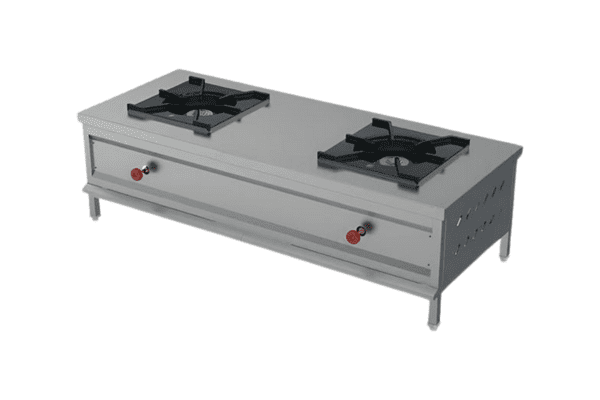
Burner count is the most visible specification when choosing a cooking range for cloud kitchen use. Here is how to match burner count to your operation:

2-Burner Commercial Range

Best for cloud kitchens targeting under 25 to 30 orders per day with a focused, simple menu of 6 to 10 items. Ideal for:

  • First-time cloud kitchen operators validating a menu concept
  • Tiffin services with a fixed daily menu
  • Single-item focused brands like a dedicated biryani or paratha brand

Advantages:

  • Smallest footprint among commercial ranges, ideal for compact kitchens under 150 square feet
  • Lower fuel consumption
  • Easier for a single cook to manage

Limitations:

  • Becomes a bottleneck above 30 orders per day
  • Cannot support multi-tasking on complex menus during peak hours

4-Burner Commercial Range

The most versatile and widely recommended cooking range for cloud kitchen operations in India. Suitable for:

  • Single-brand cloud kitchens targeting 30 to 60 orders per day
  • Menus with 10 to 18 items across one cuisine
  • Two-cook kitchens working simultaneously

Advantages:

  • Allows simultaneous cooking of multiple dishes or components
  • Handles most single-brand cloud kitchen volumes without being oversized
  • Available in a wide range of sizes to suit different kitchen layouts

This is the range Nilkanth Equipments most commonly recommends for new cloud kitchen operators in Ahmedabad who are targeting a realistic first-year order volume.

6-Burner Commercial Range

For high-volume single-brand operations or multi-brand cloud kitchens running two or more cuisines simultaneously. Suitable for:

  • Cloud kitchens targeting 60 or more orders per day
  • Multi-brand operations where two cuisines cook at the same time
  • Larger menus with 18 or more items requiring simultaneous cooking of multiple components

Advantages:

  • Maximum cooking capacity from a single range unit
  • Allows two cooks to work at the range simultaneously without interfering with each other

Limitations:

  • Larger footprint requires adequate kitchen space
  • Higher fuel consumption
  • Overkill for low-volume single-brand operations

4. BTU Output: Why It Matters for Cloud Kitchen Cooking

BTU (British Thermal Unit) measures how much heat a burner produces. For Indian cooking specifically, BTU output matters more than it does in many Western cuisines because Indian cooking relies heavily on high-heat techniques: tempering spices in hot oil, achieving the right char on tandoori items, stir-frying at high temperatures, and bringing large quantities of water to a boil quickly for rice, pasta, or dal.

Domestic stove: 1,000 to 3,000 BTU per burner Standard commercial range: 10,000 to 15,000 BTU per burner Heavy-duty commercial range: 18,000 to 25,000 BTU per burner

For cloud kitchen use, always choose a range with a minimum of 10,000 BTU per burner. A domestic-grade stove simply cannot produce the consistent high heat required for commercial cooking volumes.

For specific menu types that require intense heat, such as Indo-Chinese wok cooking or tandoori preparation, look for burners rated at 15,000 BTU or higher.

Practical impact of BTU on order speed: A high-BTU commercial burner brings oil to frying temperature in roughly half the time of a standard burner. Across 50 orders a day, this difference can save 30 to 45 minutes of total cooking time, which directly improves your average preparation time on delivery platforms.


5. Gas vs Electric Cooking Range: Which Is Better for Cloud Kitchens?

This is one of the most commonly asked questions when choosing a cooking range for cloud kitchen setups in India. The answer depends on your infrastructure, your menu, and your kitchen location.

Gas Cooking Range

Gas remains the dominant choice for Indian cloud kitchens for several practical reasons:

Instant heat control: Gas burners respond immediately to flame adjustments. Indian cooking techniques like tempering, high-heat stir-frying, and reducing gravies require precise, immediate heat changes that gas handles better than electric.

Lower fuel cost: In most parts of India, including Gujarat, LPG and PNG are more cost-effective fuel sources than commercial electricity rates for high-heat cooking.

No electricity dependency: A gas range continues working during power cuts, which are still a reality in many parts of Ahmedabad, particularly during summer peak demand periods.

PNG availability in Ahmedabad: Ahmedabad has growing PNG (Piped Natural Gas) infrastructure across commercial zones. A PNG-connected range eliminates the need for LPG cylinder management and provides a consistent, uninterrupted fuel supply.

Electric Cooking Range

Electric ranges are suitable for specific cloud kitchen use cases but are not the default recommendation for Indian cooking:

Better for: Bakery cloud kitchens, dessert brands, or health food brands where precise low-to-medium temperature control is more important than high-heat capacity.

Not ideal for: North Indian, South Indian, or Chinese cuisines that rely on high-heat cooking techniques.

Infrastructure consideration: A commercial electric range draws significantly more power than domestic appliances. Ensure your kitchen’s electrical connection is rated for commercial equipment before choosing electric.

Recommendation for Most Cloud Kitchens in India

A commercial gas range, either LPG or PNG-compatible, is the right choice for the vast majority of Indian cloud kitchens. If your menu includes baking or desserts as a secondary offering, supplement your gas range with a counter-top electric convection oven rather than replacing the gas range with electric.


6. Material and Build Quality: What to Look For

Not all commercial cooking ranges are built equally. When evaluating build quality for a cloud kitchen cooking range, check these specific features:

Stainless Steel Body

The range body must be stainless steel. This is both an FSSAI requirement for food-contact-adjacent surfaces and a practical necessity for a kitchen that will be cleaned multiple times a day. SS is resistant to rust, easy to sanitise, and far more durable than painted mild steel bodies.

Cast Iron Burners

Cast iron burners distribute heat more evenly and withstand continuous high-heat use far better than standard brass or aluminium burners. For a cloud kitchen running 8 to 12 hours a day, every day, cast iron burners are a significant quality investment.

Heavy-Duty Grate / Pan Support

The grate that holds your cookware above the burner takes enormous daily punishment in a commercial kitchen. Look for thick cast iron or heavy SS grates. Lightweight grates bend, wobble, and eventually crack under the weight of large commercial cookware.

Sturdy Legs with Height Adjustment

Commercial range legs should be heavy-gauge SS with adjustable feet. Adjustable feet allow you to level the range on uneven kitchen floors, which is important for even cooking in large pots and pans.

Easy-Access Burner Components

In a commercial kitchen, burners need regular cleaning. Choose a range where burner components, including the burner head, ring, and grate, can be easily removed and reassembled without tools. Difficult-to-clean ranges develop grease buildup that affects performance and creates a fire hazard.


7. Cooking Range Recommendations by Menu Type

North Indian Menu (Dal, Sabzi, Roti, Paneer Dishes)

Recommended range: 4-burner heavy-duty commercial gas range with high-BTU burners

Why: North Indian cooking requires simultaneous management of multiple gravies, a dal, rice, and roti production. A 4-burner range allows a competent cook to manage all of these at peak hours. High BTU is important for achieving the right char and depth of flavour in tadkas and gravies.

Additional equipment consideration: A flat tawa that sits on one burner for rotis or parathas is essential. If naan is on the menu, a tandoor is a separate requirement alongside the range.

South Indian Menu (Dosa, Idli, Sambhar, Rice Dishes)

Recommended range: 2 or 4-burner commercial gas range

Why: South Indian cooking is less reliant on simultaneous high-heat multi-dish cooking than North Indian. A 2-burner range can handle a focused South Indian menu at low to medium volumes.

Additional equipment consideration: A dedicated commercial dosa tawa is a separate requirement. It is a large, flat, circular griddle that sits on a dedicated burner and is not interchangeable with a standard cooking range grate setup.

Chinese and Indo-Chinese Menu

Recommended range: 4-burner range with at least one dedicated high-BTU wok burner (15,000 BTU or more)

Why: Authentic Indo-Chinese cooking requires extremely high heat for wok tossing. Standard commercial burners often do not produce sufficient BTU for proper wok cooking. Specify a wok burner when ordering your range if Indo-Chinese is your primary cuisine.

Bakery and Dessert Menu

Recommended range: 2-burner commercial gas range as a supplement to a commercial convection oven

Why: Bakery-focused cloud kitchens rely more on oven cooking than range cooking. The gas range handles stovetop preparations like custards, sauces, and frying, while the convection oven handles the primary baking load.

Multi-Cuisine Menu

Recommended range: 6-burner commercial gas range or two separate 4-burner ranges

Why: Running multiple cuisines simultaneously requires maximum cooking capacity. A 6-burner range allows two cooks to work independently on different cuisines without competing for burners during peak hours.


8. Single Brand vs Multi-Brand: How Your Model Affects Your Range Choice

Your cloud kitchen business model directly affects which cooking range is right for you.

Single brand cloud kitchen: A 4-burner range handles the cooking requirements of most single-brand operations comfortably. Only upgrade to a 6-burner range when your daily order volume consistently exceeds 60 orders.

Multi-brand cloud kitchen: Two cuisines cooking simultaneously almost always requires either a 6-burner range or two separate ranges. Do not try to run two distinct cuisines on a 4-burner range during overlapping peak hours. Burner competition between cuisines slows both down and creates quality inconsistencies.

For more detail on how your cloud kitchen model affects your overall equipment setup, read our guide on single brand vs multi-brand cloud kitchen equipment differences.


9. Common Mistakes When Buying a Cooking Range for Cloud Kitchens

Buying a domestic stove to save money Domestic stoves are not rated for continuous 8 to 12 hour commercial use. They break down faster, do not produce sufficient BTU for commercial cooking, and will fail an FSSAI inspection. The cost saving at purchase becomes a larger cost in replacement and downtime.

Choosing burner count based on kitchen size rather than order volume A compact 4-burner range fits in a small kitchen. A 2-burner range is not automatically better for a small kitchen if your order volume justifies 4 burners. Match burner count to volume first, then find a range that fits the space.

Ignoring BTU ratings Two ranges can both be labelled “commercial 4-burner” but have significantly different BTU outputs. A low-BTU commercial range will struggle with high-heat Indian cooking techniques just as much as a domestic stove.

Not checking PNG vs LPG compatibility before purchase If your kitchen space has PNG infrastructure, make sure your range is PNG-compatible. Not all commercial ranges are configured for both fuel types out of the box.

Skipping cast iron burners to save money Cheaper commercial ranges use standard burners that wear out much faster under continuous use. Cast iron burners last significantly longer and maintain consistent heat output over time.


10. Maintenance Tips to Extend the Life of Your Cooking Range

A quality commercial cooking range lasts 10 to 15 years with proper maintenance. Here are the daily and weekly habits that protect your investment:

Daily:

  • Wipe down the SS body with a damp cloth and food-safe sanitiser after every shift
  • Remove and rinse grates to clear food debris
  • Clear burner holes with a wire brush or pin to prevent blockage that reduces flame output

Weekly:

  • Remove burner components fully and wash in the three-compartment sink
  • Check gas connections and hose for any signs of wear or leakage
  • Inspect grates for cracks or warping and replace if needed

Monthly:

  • Have your gas regulator and connections checked by a qualified technician
  • Deep clean under and around the range to remove grease buildup
  • Check all leg adjusters and tighten if any movement has developed

Annually:

  • Full professional servicing by a qualified technician
  • Replace hose connections if showing any deterioration
  • Service your fire extinguisher alongside your annual range service

11. Complete Buying Checklist

Use this checklist when evaluating any cooking range for cloud kitchen purchase:

Must-Have Features

FeatureWhat to Check
Body materialFull SS body, not painted mild steel
Burner typeCast iron burners
BTU ratingMinimum 10,000 BTU per burner for Indian cooking
Grate qualityHeavy cast iron or thick SS pan support
Leg qualityHeavy-gauge SS with adjustable feet
Fuel typeConfirm LPG or PNG compatibility for your kitchen
Burner countMatched to your daily order target
Cleaning accessBurner components removable without tools

Nice-to-Have Features

FeatureBenefit
Pilot ignitionEasier lighting during busy service
Drip traysCatches spills and reduces cleaning time
Wok burner optionEssential for Chinese or Indo-Chinese menus
Adjustable flame valvesBetter heat control for delicate cooking

12. FAQs

Q: How many burners does a cloud kitchen need?

For most single-brand cloud kitchens targeting 30 to 60 orders per day, a 4-burner commercial range is the right starting point. Below 30 orders per day with a simple menu, a 2-burner range is sufficient. Above 60 orders per day or for multi-brand operations, a 6-burner range or two separate ranges is recommended.

Q: Is a domestic gas stove acceptable for a cloud kitchen in India?

No. Domestic stoves are not FSSAI compliant for use in a licenced cloud kitchen. They are not rated for continuous commercial use and will not pass platform inspections by Zomato or Swiggy. Always use a commercial-grade SS range.

Q: What is the difference between LPG and PNG for a commercial cooking range?

LPG (Liquefied Petroleum Gas) is supplied via cylinders and is the most common fuel source for cloud kitchens across India. PNG (Piped Natural Gas) is supplied through a fixed pipeline connection and eliminates the need for cylinder management. Both are suitable for commercial cooking ranges. Check which infrastructure is available at your kitchen location before purchasing a range.

Q: How often does a commercial cooking range need servicing?

A professional annual service is recommended for all commercial cooking ranges. Daily and weekly cleaning routines as described above extend the range life and reduce the need for repairs between annual services.

Q: Where can I buy a commercial cooking range for my cloud kitchen in Ahmedabad?

Nilkanth Equipments, based in Ahmedabad, stocks a full range of commercial gas cooking ranges in 2-burner, 4-burner, and 6-burner configurations, both new and quality pre-owned. Our team can help you choose the right range for your menu type, order volume, and kitchen space.


Ready to Choose the Right Cooking Range for Your Cloud Kitchen?

At Nilkanth Equipments, we supply commercial cooking ranges to cloud kitchens across Ahmedabad and Gujarat. Whether you need a compact 2-burner range for a first cloud kitchen or a heavy-duty 6-burner setup for a multi-brand operation, we can help you find the right match for your menu and volume.

📞 Call us or visit our showroom in Ahmedabad for a free consultation. 🌐 www.nilkanthequipments.in

Add comment

Your email address will not be published. Required fields are marked

How to Choose the Right Cooking Range for Cloud Kitchen in India

How to Choose the Right Cooking Range for Cloud Kitchen in India-Nilkanth Equipments

How to Choose the Right Cooking Range for Cloud Kitchen in India

Choosing the right cooking range for cloud kitchen operations is one of the most important equipment decisions you will make. Every single order that leaves your cloud kitchen passes through your cooking range. If it is underpowered, your prep times slow down. If it is oversized, you are wasting space and fuel. If it is the wrong type for your menu, your food quality suffers regardless of how good your recipes are.

This guide walks you through everything you need to know before buying a cooking range for your cloud kitchen in India, including burner count, BTU output, fuel type, material quality, and menu-specific recommendations.


1. Why the Cooking Range Is the Most Critical Equipment in a Cloud Kitchen

In a traditional restaurant, a dish can be partly saved by presentation, ambience, or service. In a cloud kitchen, the food alone carries the entire customer experience. By the time the order reaches the customer, the cooking range is the single piece of equipment that determined whether the food was cooked right.

Beyond food quality, your cooking range directly affects:

Order speed: A range with insufficient BTU output cannot bring water to boil, heat oil, or cook gravies as fast as a properly rated commercial range. Every extra minute at the cooking station adds up across 40 or 50 orders a day.

Delivery ratings: Zomato and Swiggy both track preparation time as a key performance metric. Consistently slow prep times push your listing down in search results. A correctly matched cooking range keeps your prep times within the platform’s target window.

Staff efficiency: A range that is the right size for your kitchen and your menu allows your team to develop a consistent cooking rhythm. A poorly chosen range forces constant workarounds that slow everyone down.

FSSAI compliance: Commercial cooking ranges are built with stainless steel bodies and food-grade materials. Domestic stoves are not compliant for use in an FSSAI-licenced cloud kitchen.


2. How to Choose the Right Cooking Range for Cloud Kitchen Operations

The right cooking range for cloud kitchen use is determined by four factors working together: the number of burners, the BTU output per burner, the fuel type, and the build quality. Choosing based on only one of these factors is where most first-time cloud kitchen operators go wrong.

Here is the decision framework:

Step 1: Determine your daily order target Your order volume determines how much simultaneous cooking capacity you need, which determines your burner count.

Step 2: Assess your menu complexity A simple single-cuisine menu with 8 to 10 items has different range requirements than a multi-cuisine menu with 20 to 25 items. More complex menus require more simultaneous cooking capacity.

Step 3: Evaluate your available kitchen space A 4-burner range takes significantly more counter space than a 2-burner range. In a compact cloud kitchen, this directly affects how much prep and packaging space you have left.

Step 4: Match the range to your fuel source Most Ahmedabad cloud kitchens use LPG cylinders or Piped Natural Gas (PNG). Your choice of fuel source affects which range models are compatible and what your ongoing fuel costs look like.

Step 5: Verify commercial-grade build quality Only SS-body commercial ranges meet FSSAI food safety standards. Cast iron burners are significantly more durable than standard burners for continuous commercial use.


3. Burner Count: 2-Burner vs 4-Burner vs 6-Burner

Burner count is the most visible specification when choosing a cooking range for cloud kitchen use. Here is how to match burner count to your operation:

2-Burner Commercial Range

Best for cloud kitchens targeting under 25 to 30 orders per day with a focused, simple menu of 6 to 10 items. Ideal for:

  • First-time cloud kitchen operators validating a menu concept
  • Tiffin services with a fixed daily menu
  • Single-item focused brands like a dedicated biryani or paratha brand

Advantages:

  • Smallest footprint among commercial ranges, ideal for compact kitchens under 150 square feet
  • Lower fuel consumption
  • Easier for a single cook to manage

Limitations:

  • Becomes a bottleneck above 30 orders per day
  • Cannot support multi-tasking on complex menus during peak hours

4-Burner Commercial Range

The most versatile and widely recommended cooking range for cloud kitchen operations in India. Suitable for:

  • Single-brand cloud kitchens targeting 30 to 60 orders per day
  • Menus with 10 to 18 items across one cuisine
  • Two-cook kitchens working simultaneously

Advantages:

  • Allows simultaneous cooking of multiple dishes or components
  • Handles most single-brand cloud kitchen volumes without being oversized
  • Available in a wide range of sizes to suit different kitchen layouts

This is the range Nilkanth Equipments most commonly recommends for new cloud kitchen operators in Ahmedabad who are targeting a realistic first-year order volume.

6-Burner Commercial Range

For high-volume single-brand operations or multi-brand cloud kitchens running two or more cuisines simultaneously. Suitable for:

  • Cloud kitchens targeting 60 or more orders per day
  • Multi-brand operations where two cuisines cook at the same time
  • Larger menus with 18 or more items requiring simultaneous cooking of multiple components

Advantages:

  • Maximum cooking capacity from a single range unit
  • Allows two cooks to work at the range simultaneously without interfering with each other

Limitations:

  • Larger footprint requires adequate kitchen space
  • Higher fuel consumption
  • Overkill for low-volume single-brand operations

4. BTU Output: Why It Matters for Cloud Kitchen Cooking

BTU (British Thermal Unit) measures how much heat a burner produces. For Indian cooking specifically, BTU output matters more than it does in many Western cuisines because Indian cooking relies heavily on high-heat techniques: tempering spices in hot oil, achieving the right char on tandoori items, stir-frying at high temperatures, and bringing large quantities of water to a boil quickly for rice, pasta, or dal.

Domestic stove: 1,000 to 3,000 BTU per burner Standard commercial range: 10,000 to 15,000 BTU per burner Heavy-duty commercial range: 18,000 to 25,000 BTU per burner

For cloud kitchen use, always choose a range with a minimum of 10,000 BTU per burner. A domestic-grade stove simply cannot produce the consistent high heat required for commercial cooking volumes.

For specific menu types that require intense heat, such as Indo-Chinese wok cooking or tandoori preparation, look for burners rated at 15,000 BTU or higher.

Practical impact of BTU on order speed: A high-BTU commercial burner brings oil to frying temperature in roughly half the time of a standard burner. Across 50 orders a day, this difference can save 30 to 45 minutes of total cooking time, which directly improves your average preparation time on delivery platforms.


5. Gas vs Electric Cooking Range: Which Is Better for Cloud Kitchens?

This is one of the most commonly asked questions when choosing a cooking range for cloud kitchen setups in India. The answer depends on your infrastructure, your menu, and your kitchen location.

Gas Cooking Range

Gas remains the dominant choice for Indian cloud kitchens for several practical reasons:

Instant heat control: Gas burners respond immediately to flame adjustments. Indian cooking techniques like tempering, high-heat stir-frying, and reducing gravies require precise, immediate heat changes that gas handles better than electric.

Lower fuel cost: In most parts of India, including Gujarat, LPG and PNG are more cost-effective fuel sources than commercial electricity rates for high-heat cooking.

No electricity dependency: A gas range continues working during power cuts, which are still a reality in many parts of Ahmedabad, particularly during summer peak demand periods.

PNG availability in Ahmedabad: Ahmedabad has growing PNG (Piped Natural Gas) infrastructure across commercial zones. A PNG-connected range eliminates the need for LPG cylinder management and provides a consistent, uninterrupted fuel supply.

Electric Cooking Range

Electric ranges are suitable for specific cloud kitchen use cases but are not the default recommendation for Indian cooking:

Better for: Bakery cloud kitchens, dessert brands, or health food brands where precise low-to-medium temperature control is more important than high-heat capacity.

Not ideal for: North Indian, South Indian, or Chinese cuisines that rely on high-heat cooking techniques.

Infrastructure consideration: A commercial electric range draws significantly more power than domestic appliances. Ensure your kitchen’s electrical connection is rated for commercial equipment before choosing electric.

Recommendation for Most Cloud Kitchens in India

A commercial gas range, either LPG or PNG-compatible, is the right choice for the vast majority of Indian cloud kitchens. If your menu includes baking or desserts as a secondary offering, supplement your gas range with a counter-top electric convection oven rather than replacing the gas range with electric.


6. Material and Build Quality: What to Look For

Not all commercial cooking ranges are built equally. When evaluating build quality for a cloud kitchen cooking range, check these specific features:

Stainless Steel Body

The range body must be stainless steel. This is both an FSSAI requirement for food-contact-adjacent surfaces and a practical necessity for a kitchen that will be cleaned multiple times a day. SS is resistant to rust, easy to sanitise, and far more durable than painted mild steel bodies.

Cast Iron Burners

Cast iron burners distribute heat more evenly and withstand continuous high-heat use far better than standard brass or aluminium burners. For a cloud kitchen running 8 to 12 hours a day, every day, cast iron burners are a significant quality investment.

Heavy-Duty Grate / Pan Support

The grate that holds your cookware above the burner takes enormous daily punishment in a commercial kitchen. Look for thick cast iron or heavy SS grates. Lightweight grates bend, wobble, and eventually crack under the weight of large commercial cookware.

Sturdy Legs with Height Adjustment

Commercial range legs should be heavy-gauge SS with adjustable feet. Adjustable feet allow you to level the range on uneven kitchen floors, which is important for even cooking in large pots and pans.

Easy-Access Burner Components

In a commercial kitchen, burners need regular cleaning. Choose a range where burner components, including the burner head, ring, and grate, can be easily removed and reassembled without tools. Difficult-to-clean ranges develop grease buildup that affects performance and creates a fire hazard.


7. Cooking Range Recommendations by Menu Type

North Indian Menu (Dal, Sabzi, Roti, Paneer Dishes)

Recommended range: 4-burner heavy-duty commercial gas range with high-BTU burners

Why: North Indian cooking requires simultaneous management of multiple gravies, a dal, rice, and roti production. A 4-burner range allows a competent cook to manage all of these at peak hours. High BTU is important for achieving the right char and depth of flavour in tadkas and gravies.

Additional equipment consideration: A flat tawa that sits on one burner for rotis or parathas is essential. If naan is on the menu, a tandoor is a separate requirement alongside the range.

South Indian Menu (Dosa, Idli, Sambhar, Rice Dishes)

Recommended range: 2 or 4-burner commercial gas range

Why: South Indian cooking is less reliant on simultaneous high-heat multi-dish cooking than North Indian. A 2-burner range can handle a focused South Indian menu at low to medium volumes.

Additional equipment consideration: A dedicated commercial dosa tawa is a separate requirement. It is a large, flat, circular griddle that sits on a dedicated burner and is not interchangeable with a standard cooking range grate setup.

Chinese and Indo-Chinese Menu

Recommended range: 4-burner range with at least one dedicated high-BTU wok burner (15,000 BTU or more)

Why: Authentic Indo-Chinese cooking requires extremely high heat for wok tossing. Standard commercial burners often do not produce sufficient BTU for proper wok cooking. Specify a wok burner when ordering your range if Indo-Chinese is your primary cuisine.

Bakery and Dessert Menu

Recommended range: 2-burner commercial gas range as a supplement to a commercial convection oven

Why: Bakery-focused cloud kitchens rely more on oven cooking than range cooking. The gas range handles stovetop preparations like custards, sauces, and frying, while the convection oven handles the primary baking load.

Multi-Cuisine Menu

Recommended range: 6-burner commercial gas range or two separate 4-burner ranges

Why: Running multiple cuisines simultaneously requires maximum cooking capacity. A 6-burner range allows two cooks to work independently on different cuisines without competing for burners during peak hours.


8. Single Brand vs Multi-Brand: How Your Model Affects Your Range Choice

Your cloud kitchen business model directly affects which cooking range is right for you.

Single brand cloud kitchen: A 4-burner range handles the cooking requirements of most single-brand operations comfortably. Only upgrade to a 6-burner range when your daily order volume consistently exceeds 60 orders.

Multi-brand cloud kitchen: Two cuisines cooking simultaneously almost always requires either a 6-burner range or two separate ranges. Do not try to run two distinct cuisines on a 4-burner range during overlapping peak hours. Burner competition between cuisines slows both down and creates quality inconsistencies.

For more detail on how your cloud kitchen model affects your overall equipment setup, read our guide on single brand vs multi-brand cloud kitchen equipment differences.


9. Common Mistakes When Buying a Cooking Range for Cloud Kitchens

Buying a domestic stove to save money Domestic stoves are not rated for continuous 8 to 12 hour commercial use. They break down faster, do not produce sufficient BTU for commercial cooking, and will fail an FSSAI inspection. The cost saving at purchase becomes a larger cost in replacement and downtime.

Choosing burner count based on kitchen size rather than order volume A compact 4-burner range fits in a small kitchen. A 2-burner range is not automatically better for a small kitchen if your order volume justifies 4 burners. Match burner count to volume first, then find a range that fits the space.

Ignoring BTU ratings Two ranges can both be labelled “commercial 4-burner” but have significantly different BTU outputs. A low-BTU commercial range will struggle with high-heat Indian cooking techniques just as much as a domestic stove.

Not checking PNG vs LPG compatibility before purchase If your kitchen space has PNG infrastructure, make sure your range is PNG-compatible. Not all commercial ranges are configured for both fuel types out of the box.

Skipping cast iron burners to save money Cheaper commercial ranges use standard burners that wear out much faster under continuous use. Cast iron burners last significantly longer and maintain consistent heat output over time.


10. Maintenance Tips to Extend the Life of Your Cooking Range

A quality commercial cooking range lasts 10 to 15 years with proper maintenance. Here are the daily and weekly habits that protect your investment:

Daily:

  • Wipe down the SS body with a damp cloth and food-safe sanitiser after every shift
  • Remove and rinse grates to clear food debris
  • Clear burner holes with a wire brush or pin to prevent blockage that reduces flame output

Weekly:

  • Remove burner components fully and wash in the three-compartment sink
  • Check gas connections and hose for any signs of wear or leakage
  • Inspect grates for cracks or warping and replace if needed

Monthly:

  • Have your gas regulator and connections checked by a qualified technician
  • Deep clean under and around the range to remove grease buildup
  • Check all leg adjusters and tighten if any movement has developed

Annually:

  • Full professional servicing by a qualified technician
  • Replace hose connections if showing any deterioration
  • Service your fire extinguisher alongside your annual range service

11. Complete Buying Checklist

Use this checklist when evaluating any cooking range for cloud kitchen purchase:

Must-Have Features

FeatureWhat to Check
Body materialFull SS body, not painted mild steel
Burner typeCast iron burners
BTU ratingMinimum 10,000 BTU per burner for Indian cooking
Grate qualityHeavy cast iron or thick SS pan support
Leg qualityHeavy-gauge SS with adjustable feet
Fuel typeConfirm LPG or PNG compatibility for your kitchen
Burner countMatched to your daily order target
Cleaning accessBurner components removable without tools

Nice-to-Have Features

FeatureBenefit
Pilot ignitionEasier lighting during busy service
Drip traysCatches spills and reduces cleaning time
Wok burner optionEssential for Chinese or Indo-Chinese menus
Adjustable flame valvesBetter heat control for delicate cooking

12. FAQs

Q: How many burners does a cloud kitchen need?

For most single-brand cloud kitchens targeting 30 to 60 orders per day, a 4-burner commercial range is the right starting point. Below 30 orders per day with a simple menu, a 2-burner range is sufficient. Above 60 orders per day or for multi-brand operations, a 6-burner range or two separate ranges is recommended.

Q: Is a domestic gas stove acceptable for a cloud kitchen in India?

No. Domestic stoves are not FSSAI compliant for use in a licenced cloud kitchen. They are not rated for continuous commercial use and will not pass platform inspections by Zomato or Swiggy. Always use a commercial-grade SS range.

Q: What is the difference between LPG and PNG for a commercial cooking range?

LPG (Liquefied Petroleum Gas) is supplied via cylinders and is the most common fuel source for cloud kitchens across India. PNG (Piped Natural Gas) is supplied through a fixed pipeline connection and eliminates the need for cylinder management. Both are suitable for commercial cooking ranges. Check which infrastructure is available at your kitchen location before purchasing a range.

Q: How often does a commercial cooking range need servicing?

A professional annual service is recommended for all commercial cooking ranges. Daily and weekly cleaning routines as described above extend the range life and reduce the need for repairs between annual services.

Q: Where can I buy a commercial cooking range for my cloud kitchen in Ahmedabad?

Nilkanth Equipments, based in Ahmedabad, stocks a full range of commercial gas cooking ranges in 2-burner, 4-burner, and 6-burner configurations, both new and quality pre-owned. Our team can help you choose the right range for your menu type, order volume, and kitchen space.


Ready to Choose the Right Cooking Range for Your Cloud Kitchen?

At Nilkanth Equipments, we supply commercial cooking ranges to cloud kitchens across Ahmedabad and Gujarat. Whether you need a compact 2-burner range for a first cloud kitchen or a heavy-duty 6-burner setup for a multi-brand operation, we can help you find the right match for your menu and volume.

📞 Call us or visit our showroom in Ahmedabad for a free consultation. 🌐 www.nilkanthequipments.in

Functional Design Impact

Share This Post!

Subscribe Now!

Stay updated with the latest interior design insights and trends. Receive expert tips directly to your inbox.