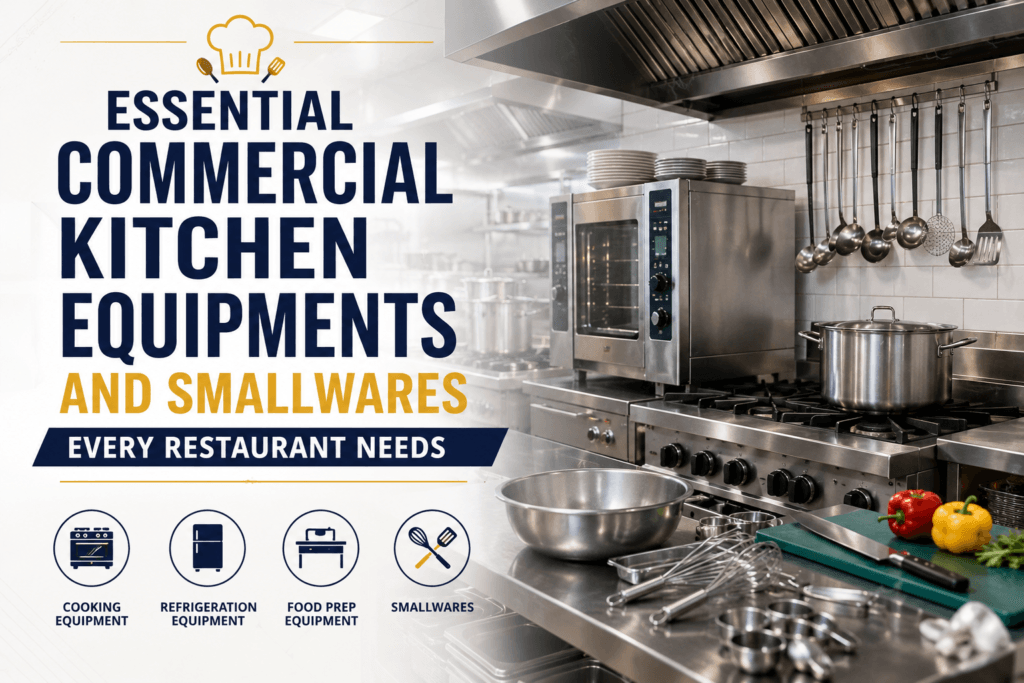
A commercial kitchen runs on far more than its ovens and burners. The smaller tools on the line, the prep counter, and the pass often decide how fast an order actually reaches the table. Choosing the Right Commercial Kitchen Equipments is one of the most overlooked steps in setting up a professional kitchen, yet it directly affects prep speed, food safety, and daily consistency. This guide breaks down the essential smallwares every restaurant, cloud kitchen, hotel, or catering business needs, and why each one matters.
Why Commercial Kitchen Utensils Deserve as Much Attention as Big Equipment
Owners planning a new kitchen tend to focus their budget and attention on ovens, fryers, and refrigeration first. Utensils and smallwares get treated as an afterthought, picked up quickly once the bigger purchases are done. This is a mistake. According to industry estimates for 2026, food businesses that under-invest in prep tools see measurably slower ticket times during peak hours, since staff end up sharing or hunting for basic items mid-service.
The right set of commercial kitchen utensils reduces bottlenecks at the prep station, keeps food handling hygienic, and supports FSSAI compliance around cross-contamination and food-contact surfaces. A well-stocked utensil station is what lets a kitchen actually use its expensive equipment at full capacity.
Core Categories of Kitchen Utensils and Smallwares
Cutting and Prep Tools
Every kitchen needs a range of knives suited to different tasks, from chef’s knives for general prep to boning and paring knives for finer work. Cutting boards, ideally color-coded by category (meat, vegetables, dairy) to prevent cross-contamination, are a basic FSSAI-aligned practice. Peelers, graters, and mandoline slicers round out the prep station for high-volume vegetable and fruit work.
Measuring and Portioning Tools
Consistency across every plate depends on accurate measuring. Measuring cups, spoons, and digital kitchen scales help kitchens standardize recipes across shifts and staff. Portion scoops and ladles in multiple sizes ensure every serving matches the menu’s costed portion size, which matters directly for margins.
Mixing and Prep Bowls
Stainless steel mixing bowls in a range of sizes are one of the most-used items in any commercial kitchen. They are needed for marination, batter prep, sauce mixing, and holding prepped ingredients during service. Nesting bowl sets save storage space in kitchens with tighter layouts.
Serving and Plating Tools
Tongs, spatulas, ladles, and serving spoons form the backbone of the pass. Silicone-tipped tongs protect non-stick cookware, while slotted spoons and skimmers are essential for frying and boiling stations. These tools see constant use, so build quality and grip comfort matter for staff working long shifts.
GN Pans and Storage Containers
Gastronorm (GN) pans are a standard across Indian commercial kitchens for holding, storing, and transporting prepped food, especially in bain marie and buffet setups. Airtight storage containers with clear labeling support both food safety and inventory tracking, helping kitchens reduce wastage from spoiled or forgotten ingredients.
Cleaning and Sanitation Tools
Scrub brushes, sanitizing buckets, and color-coded cleaning cloths are non-negotiable for maintaining hygiene standards. FSSAI guidelines require visible, consistent cleaning protocols, and having dedicated smallwares for sanitation (kept separate from food-prep tools) is part of passing a kitchen inspection.
How to Choose the Right Utensils for Your Kitchen
Match Tools to Your Menu
A kitchen doing high-volume frying needs a different smallwares setup than one focused on grilling or baking. Before stocking up, map your utensil needs against your actual menu and daily order volume rather than buying a generic starter kit.
Prioritize Food-Grade Stainless Steel
Stainless steel (SS 304 grade where possible) resists corrosion, withstands repeated sanitizing, and holds up under heavy daily use far better than lower-grade metal or plastic alternatives. For a commercial kitchen, this upfront quality choice reduces replacement frequency significantly over time.
Plan for Redundancy During Peak Hours
Having only one of each tool creates bottlenecks the moment two stations need the same item simultaneously. Kitchens with tight morning or dinner rushes should stock duplicates of high-use items like tongs, ladles, and cutting boards.
Factor in Storage and Organization
Utensils without a proper storage system end up misplaced or damaged. Wall-mounted racks, drawer dividers, and labeled bins keep tools accessible and extend their working life.
Common Mistakes Restaurants Make with Kitchen Smallwares
Many new kitchens underestimate how quickly smallwares wear out or go missing under commercial use, leading to mid-service scrambles. Others buy household-grade tools instead of commercial-grade ones, which fail faster under continuous use and higher heat exposure. Skipping color-coded cutting boards and dedicated cleaning tools is another common gap that creates food safety risk during inspections.
Building a Complete, Reliable Kitchen Setup
Commercial kitchen utensils might be small individually, but together they determine how smoothly a kitchen runs every single day. Investing in the right cutting tools, measuring equipment, mixing bowls, serving tools, GN pans, and sanitation smallwares is just as important as choosing the right oven or refrigeration unit.
Nilkanth Equipments supplies a complete range of commercial kitchen utensils and accessories alongside full equipment and furniture setups for restaurants, hotels, cloud kitchens, and institutional kitchens across Gujarat. Whether you’re setting up a new kitchen or restocking an existing one, our team can help you build a setup that matches your menu, volume, and budget.