Starting a cloud kitchen in India is one of the smartest food business moves right now. No dining area, no expensive interiors, no large staff, just a well-equipped kitchen and a great menu. Zomato and Swiggy have made it easier than ever to reach thousands of hungry customers without ever opening a restaurant door.
But here is where most new cloud kitchen owners go wrong: they underestimate how much the equipment matters. The wrong equipment leads to slow order fulfilment, inconsistent food quality, FSSAI compliance issues, and ultimately, bad reviews that kill a delivery-only business fast.
This guide gives you a complete, India-specific cloud kitchen equipment checklist, covering what to buy, what to prioritise, and what you can add later as your business grows.
1. What Is a Cloud Kitchen and Why Equipment Matters So Much
A cloud kitchen, also called a ghost kitchen or virtual kitchen, is a delivery-only food business that operates without a dine-in space. Orders come in through platforms like Zomato, Swiggy, or your own website, and food goes out through delivery partners.
India’s cloud kitchen market is growing at over 20% year-on-year, driven by rising food delivery demand and lower startup costs compared to traditional restaurants. Unlike a traditional restaurant, there is no front-of-house to fall back on; your kitchen is your entire business.
Unlike a dine-in restaurant where ambience and service absorb customer attention, a cloud kitchen lives or dies on two things: food quality and delivery speed. Both depend entirely on your equipment. A slow cooker means late deliveries and one-star ratings. Unreliable refrigeration means wasted ingredients and unsafe food.
Getting your equipment selection right from day one saves you money, protects your FSSAI licence, and gives you the foundation to scale.
If you want complete guidance on how to setup your cloud kitchen in India, you can read it here.
2. Core Cooking Equipment
This is the heart of your cloud kitchen. Choose based on your menu, do not over-invest here at the start.
Commercial Gas Cooking Range
The single most important piece of equipment in any Indian cloud kitchen. Used for frying, boiling, sautéing, tempering, essentially everything.
- 2-burner range : Sufficient for a single brand, low order volume (under 30 orders/day)
- 4-burner range : Ideal for most single-brand cloud kitchens
- 6-burner range : For multi-brand or high-volume operations (50+ orders/day)
Nilkanth recommends: For a new cloud kitchen targeting 20–40 orders per day, a heavy-duty 4-burner SS commercial range is the ideal starting point. Look for a range with cast iron burners and a sturdy SS frame; it will last far longer than lighter domestic-grade alternatives.
Tandoor (if applicable)
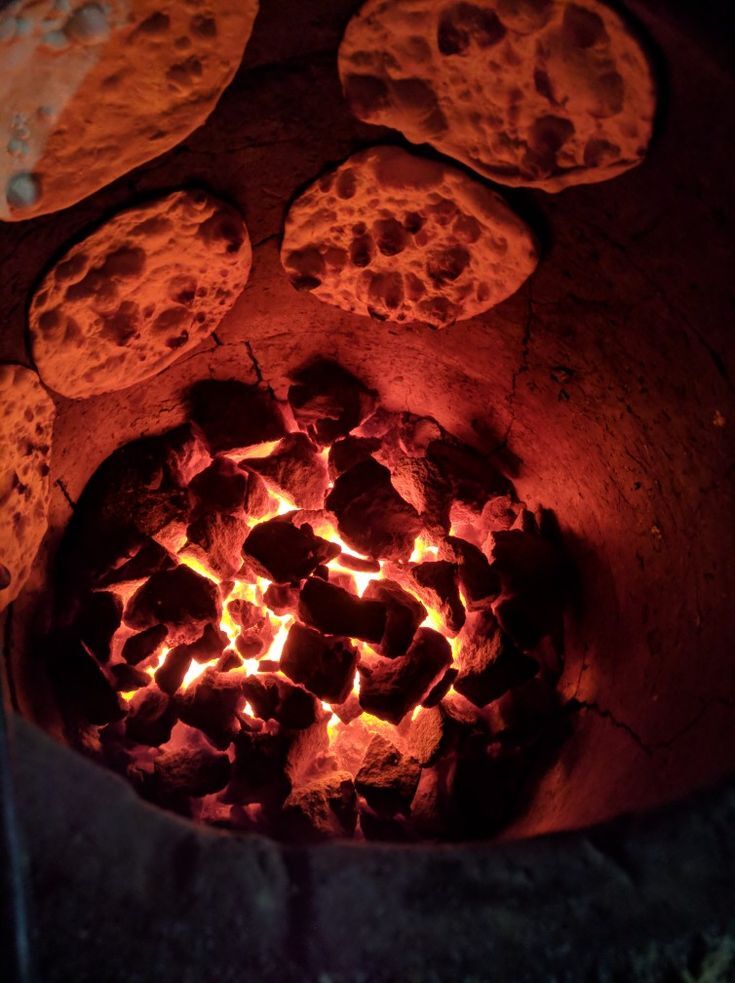
If your menu includes naan, roti, or tandoori items, a commercial tandoor is non-negotiable. Available in mini and standard commercial sizes depending on your volume. Ensure your kitchen has proper ventilation before installing one.
Commercial Microwave or Convection Oven
Essential for reheating, grilling, and baking functions. Not a replacement for a range, but a valuable addition for faster order turnaround.
Deep Fryer (if applicable)
For cloud kitchens serving fried snacks, Chinese food, or fast food items. Choose between a single-tank or double-tank fryer based on how much of your menu relies on frying.
3. Food Preparation Equipment
Stainless Steel Work Tables
You will need at least 2 SS work tables: one for prep and one for assembly and packaging. All surfaces in contact with food must be stainless steel as per FSSAI guidelines. Choose the size based on your available kitchen space.
Commercial Mixer / Grinder
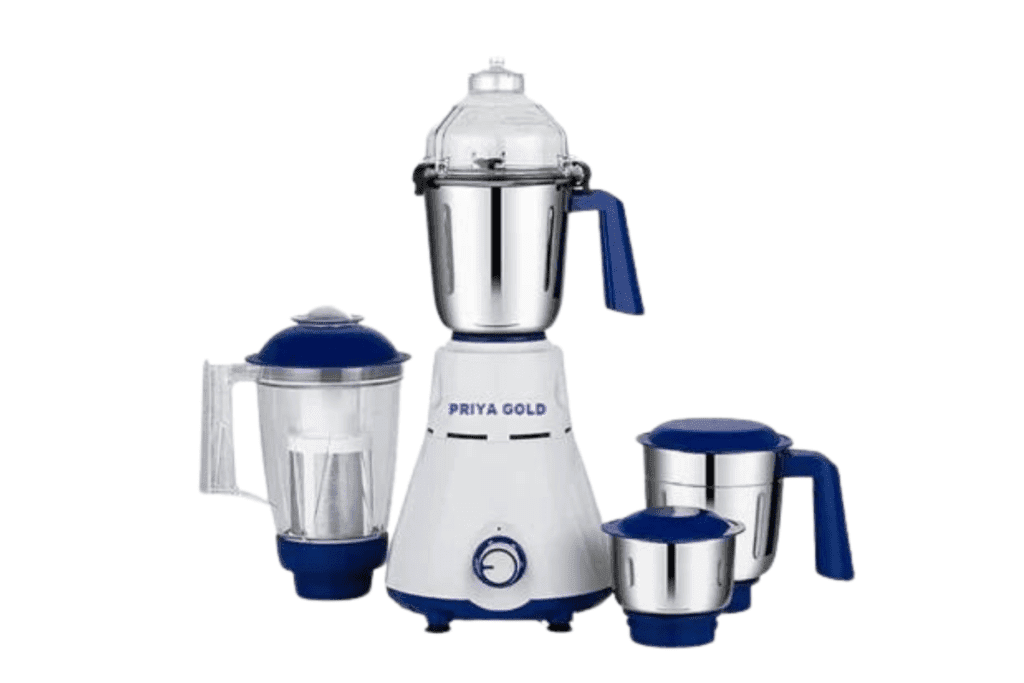
For grinding masalas, mixing dough, or blending sauces. A standard table-top mixer grinder works for small operations; a heavy-duty floor mixer is essential for bakery-focused cloud kitchens.
Chopping Boards and Knife Set
Must be colour-coded as per FSSAI food safety norms:
- Red: raw meat
- Green: vegetables and fruits
- Yellow: cooked food
- White: dairy
This is a non-negotiable FSSAI requirement, not optional.
Weighing Scale
A must for portion consistency and food cost control. Every cloud kitchen, regardless of size, needs at least one accurate commercial weighing scale.
Food Processor
Useful if you are processing large quantities of vegetables, sauces, or marinades daily. Can be added once your order volume justifies it.
4. Refrigeration and Storage Equipment
Proper refrigeration is one of the most critical FSSAI requirements and also one of the biggest cost-savers when it comes to reducing food waste.
Commercial Single-Door Refrigerator
For storing prepped ingredients, marinades, and cooked components at 1–4°C. Every cloud kitchen needs at least one from day one.
Chest Freezer
For storing frozen ingredients, proteins in bulk, or ice cream. Essential if your menu uses any frozen components.
Under-Counter Refrigerator (optional)
Placed directly at the cooking station for easy access to frequently used ingredients. Saves time during peak hours and reduces unnecessary movement in a compact kitchen.
Dry Storage Shelving
Heavy-duty SS racks for storing dry goods, packaging materials, and utensils. FSSAI requires all dry goods to be stored at least 15 cm off the floor, proper shelving is the easiest way to comply.
Important: Never store raw meat above cooked food in your refrigerator. Raw meat always goes on the bottom shelf. This is both an FSSAI requirement and basic food safety practice.
5. Dishwashing and Sanitation Equipment
Cloud kitchens often underinvest here and it shows during FSSAI inspections.
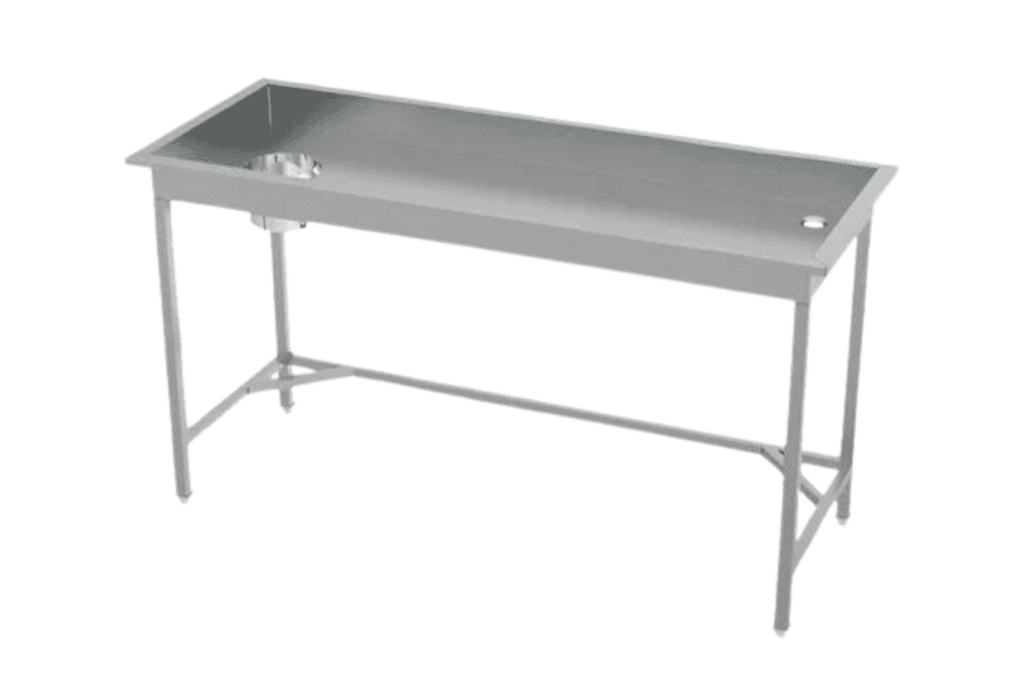
Three-Compartment Sink
Required by FSSAI: one compartment for washing, one for rinsing, and one for sanitising. This is mandatory and cannot be substituted with a regular single sink
Separate Handwashing Sink
FSSAI mandates a dedicated handwash sink at the kitchen entry point, separate from the utensil washing area. Soap and single-use paper towels must always be available here
Commercial Dishwasher
Not essential when starting out, but highly recommended once you cross 50+ orders per day. Saves significant time and consistently reaches the sanitisation temperatures that manual washing rarely achieves.
Sanitiser Dispensers and Cleaning Supplies
Food-safe sanitiser dispensers must be present at all prep stations. This is a basic FSSAI requirement and a hygiene non-negotiable.
6. Ventilation and Safety Equipment
This is an area most first-time cloud kitchen owners overlook until they face an FSSAI inspection or a kitchen fire.
Commercial Exhaust Hood
Mandatory above every cooking station. Removes smoke, grease, and heat from the kitchen. The size of your exhaust hood should match the width of your cooking range.
Exhaust Fan and Ducting
Works alongside the exhaust hood to push air out of the kitchen. Proper ducting ensures smoke and heat actually exit the space rather than recirculating.
Fire Extinguisher
Required by FSSAI and your local fire department NOC. Keep at least one ABC-type dry powder extinguisher (2 kg minimum) near the cooking area. Check and service it annually.
First Aid Kit
Must be accessible to all kitchen staff at all times. A basic requirement that is often missed during early setup
7. Packaging and Dispatch Station
This is often an afterthought, but a well-organised packaging station directly affects your delivery time which directly affects your rating on Zomato and Swiggy.
Heat Sealing Machine
For sealing packaging pouches, it reduces spillage during delivery and makes your packaging look professional and tamper-proof.
Packaging Station Table
A dedicated SS table near the kitchen exit for packing and labelling orders. Keeping this separate from your prep area avoids cross-contamination and speeds up dispatch.
Label Printer
For printing order labels with item names, allergen information, and preparation time. As your volume grows, this saves significant time compared to handwritten labels.
Insulated Delivery Bags
If you are managing your own delivery rather than relying on Zomato or Swiggy riders, insulated bags are essential to maintain food temperature and quality on the way to the customer.
8. Complete Checklist at a Glance
✅ Must-Have (Day 1)
| Equipment1 | Notes |
| Commercial gas range | A 4-burner is recommended for most cloud kitchens |
| SS work tables (×2) | One for prep, one for packaging |
| Commercial refrigerator | Minimum one single-door unit |
| Chest freezer | For proteins and frozen ingredients |
| Three-compartment sink | Mandatory FSSAI requirement |
| Handwashing sink | Separate from utensil washing – FSSAI mandatory |
| Exhaust hood + fan | Above every cooking station |
| Mixer / grinder | Based on menu requirements |
| Chopping boards | FSSAI mandator-4 colours minimum |
| Weighing scale | For portion control and cost management |
| SS storage shelving (×2) | All goods stored 15 cm off the floor |
| Fire extinguisher | ABC-type, 2 kg minimum |
| Heat sealing machine | For professional, spill-proof packaging |
| Packaging station table | Near kitchen exit, separate from prep area |
Add Later as volume grows
| Equipment | When to Add |
| Deep fryer | If your menu includes fried items |
| Under-counter refrigerator | When speed at the cooking station matters |
| Commercial dishwasher | Once you cross 50+ orders per day |
| Convection oven | For baking or rapid reheating requirements |
| Food processor | When prep volumes increase significantly |
| Label printer | When handwritten labels slow you down |
9. New vs Second-Hand Equipment: What Makes Sense?
This is one of the most common dilemmas for first-time cloud kitchen owners. Here is a practical breakdown:
Buy new when:
- The item is high-use and safety-critical : gas range, exhaust hood, fire extinguisher.
- You need a manufacturer warranty for peace of mind
- The item has moving or electronic parts that wear over time: refrigerator, dishwasher
Second-hand is fine when:
- The item is simple and structural (SS work tables, storage shelving, sinks)
- You can inspect the item in person before buying
- You are purchasing from a reliable, established equipment supplier who can vouch for the condition
At Nilkanth Equipment, we stock both new and quality pre-owned commercial kitchen equipment, and our team can help you decide what makes sense for your specific menu, volume, and budget.
10. FSSAI Equipment Compliance: What You Must Have
If you are applying for an FSSAI licence for your cloud kitchen, which is mandatory), your kitchen will be physically inspected. Here is what inspectors look for:
- All food-contact surfaces must be stainless steel ;no wood, no plastic cutting surfaces in food prep areas
- Separate handwashing sink with soap and disposable towels ; not shared with utensil washing
- Colour-coded chopping boards for different food types
- Adequate refrigeration with working temperature displays
- Pest-proofed storage: all dry goods stored at least 15 cm off the floor
- Proper exhaust and ventilation system above all cooking stations
- Potable water source with adequate drainage
- Waste bins with lids at each prep station
Failing an FSSAI inspection delays your launch by weeks. Getting the right equipment from day one means you pass on the first visit.
11. FAQs
What is the minimum equipment required to start a cloud kitchen in India?
At a bare minimum you need a commercial cooking range, at least one SS work table, a refrigerator, a three-compartment sink, a handwashing sink, and an exhaust system. This covers both basic operations and the core FSSAI requirements. Everything else can be added as your order volume grows.
Can I use home kitchen equipment for my cloud kitchen?
No. Domestic kitchen equipment is not designed for continuous high-volume use and will break down quickly. More importantly, FSSAI licensing requires commercial-grade stainless steel equipment. Using domestic equipment can lead to licence rejection during inspection.
How long does commercial kitchen equipment last?
Quality commercial SS equipment , ranges, work tables, sinks, lasts 10–15 years with proper maintenance. Refrigeration units typically last 8–12 years. Investing in good quality upfront saves you replacement costs and downtime later.
Where can I buy commercial kitchen equipment in Ahmedabad?
Nilkanth Equipments, based in Ahmedabad, supplies a full range of commercial kitchen equipment, from cooking ranges and refrigeration to crockery, utensils, and furniture, both new and quality pre-owned. We serve restaurants, cloud kitchens, hotels, and institutions across Gujarat and India.
Should I buy equipment before or after getting my FSSAI licence?
Ideally, plan your equipment list alongside your FSSAI application, not after. FSSAI inspectors assess your physical kitchen setup, so having the right equipment in place before your inspection date saves you time and avoids re-inspection delays
Ready to Equip Your Cloud Kitchen?
Setting up your cloud kitchen equipment correctly from the start is the difference between a smooth launch and months of avoidable problems. Whether you are just starting out or scaling up an existing operation, Nilkanth Equipments can help you put together the right setup for your menu, space, and budget.